
A Bunk Bed for One Child: Room for Everyday Life and Future Plans
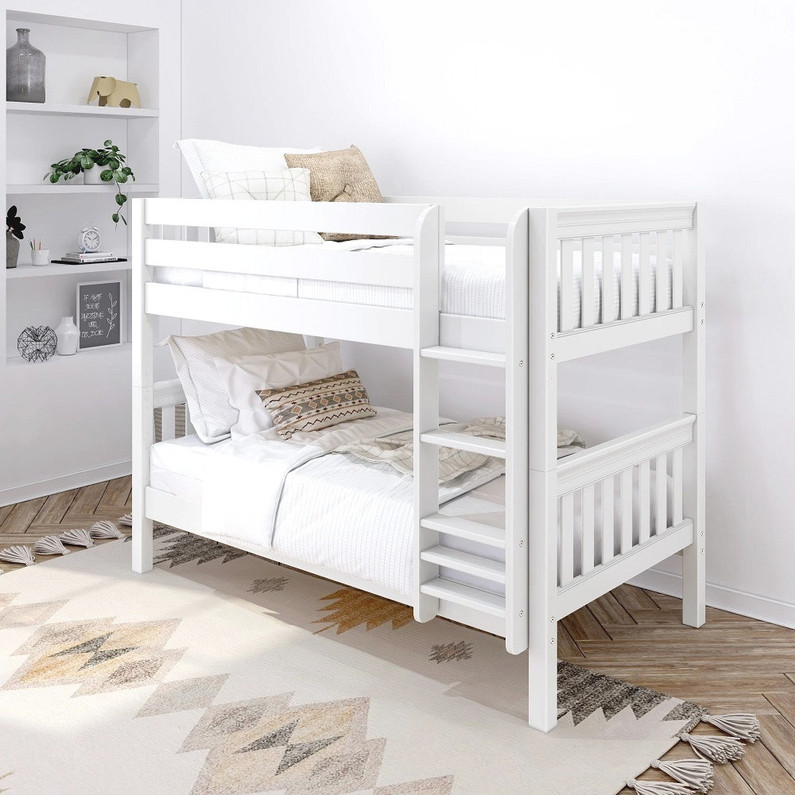
One child can have plenty of reasons to keep a bunk bed: a favorite sleeping level, a reading spot or a bed ready for a cousin. The question is how your child uses both levels and whether the setup still works in the room.
When the kids in our owner's family changed rooms, one child wanted to keep his bunk bed. He liked sleeping on top some nights and on the bottom on others, and the extra bed came in handy when his cousins stayed over.
Whether you are buying a bunk or deciding what to keep, start with those everyday habits—and whether your child is ready for the upper bunk.
Both levels can be part of everyday life
For a child who can safely use the upper bunk, the choice might be as simple as: where do I want to read tonight? The spare mattress could hold a carefully arranged collection of stuffed animals one day and be ready for a guest another.
The lower bunk can be a cozy place to sit with a book or wind down before sleep. Keep the ladder and guardrails clear so the bed remains easy to use.
IKEA agrees that a bunk can be useful in a home with one child. Its bunk-bed guide describes choosing between levels and using the extra bed for visiting cousins or friends, reading or stuffed animals.
Ask what your child would actually miss
Before replacing the bed, find out which parts of the setup your child values. A few questions can help:
- Which level do you like sleeping on, and does that change?
- Do you use the other bunk for reading or quiet time?
- When someone stays over, do you like having another bed ready?
- Would a desk, more open floor or a different bed be more useful now?
Research on children’s use of space offers some context. In a 2024 study of 45 families in England and Scotland, children and teenagers valued privacy, choice, ownership and time to themselves. The lockdown-era interviews explored home life; they did not test whether bunk beds provide particular benefits.
A cousin can live down the street
A cousin who lives down the street may still stay the night. Friends can come for sleepovers, and siblings with separate rooms may occasionally want to share again. Having a bed ready leaves room for those visits without bringing another bed into the room.
Plan who will use each level before a visit. Every upper-bunk sleeper needs to meet the bed's age and use requirements; if neither child can use it safely, plan another sleeping place.
A May 2026 customer review of our Humboldt White XL Low Bunk Beds gives a visiting-family example: the customer bought the bed for older grandchildren and chose the optional trundle for extra guests.

Four ways to use the room as needs change
Keeping the bunk, separating it or choosing a different bed can each make sense. Compare them against what your child enjoys now and what the room needs next.
Keep it assembled
Keep it assembled if your child enjoys both levels and the arrangement leaves comfortable headroom and access. A ready guest bed may be another reason to keep it, but daily use can be reason enough.
Separate a model designed for it
If your model is designed to separate, follow its conversion instructions and check which components are required. Measure for both beds in their new positions; each needs its own floor space and access.
Choose a single bed, daybed or trundle
A single bed or daybed may be a better fit if your child wants easier access or more open space. For occasional guests, a bed with a trundle is another option. Measure it with the trundle open and leave a clear route past it.
Consider a loft when the priority is space below
If a desk or usable space underneath matters more than a second bed, compare the options in our bunk-bed versus loft-bed guide. Do not remove a lower bunk or its supports to make a loft unless the manufacturer provides instructions for that conversion.
Buying a bunk with future choices in mind
Choose for the child and room you have now, with a few future changes in mind. Consider mattress width and length, access to each level and whether a documented separation option would be useful.
Our Humboldt White XL Low Bunk Beds, for example, come in Twin XL and Full XL sizes, with a trundle, drawers and cubbies selected separately. Choose the under-bed option that suits your plans, and allow space to use it.
Our Twin-over-Twin versus Twin-over-Full comparison can help with mattress widths. As you compare the complete cost, include mattresses, bedding and any optional storage or guest-bed components.
Keep comfort and safety together
Children under six should not use the upper bunk. For older children, follow the bed's age, mattress, weight and access instructions, use the guardrails and ladder, and allow only one person on the upper bunk. No horseplay on or under the beds. See our top-bunk readiness guide for practical questions and the federal bunk-bed instructions requirements for the underlying rules.
A lower bunk can offer that tucked-away, fort-like feeling without altering the frame. Use only accessories designed for the exact bed; do not hang improvised fabric, cords or ropes from it or remove structural parts.
Choose around the life in the room
The bed's next use may be as ordinary as a quiet place to read or as occasional as a cousin staying over. Let those real uses guide your decision.
If you are comparing bunk beds, send the Totally Home team your room measurements, the model you are considering and how you want to use each level. We can help you compare sizes and available configurations.

Recent Posts
-
A Bunk Bed for One Child: Room for Everyday Life and Future Plans
One child can have plenty of reasons to keep a bunk bed: a favorite sleeping level, a reading spot … -
More Beds, Not More Bedrooms: What an Extra Sleeping Spot Is Worth to a Short-Term Rental
Quick Nav Overview Why Guest Count Sets Your Rate Before Bedroom Count Does What One Extra Sleepin … -
Bunk and Loft Bed Delivery: What to Expect and How to Prepare
Your guide to receiving and setting up bunk beds, loft beds and other Totally Home furniture—includ …