
Warm Wood Furniture: How to Mix Finishes Without a Matching Set
A room can feel pulled together even when the bed, dresser and nightstands came from different collections. Start with the furniture you want to keep, then choose a connection for the next piece: a similar warmth, a repeated detail or a color that works with the room.
Start with what you need the new piece to do. A dresser might solve a storage problem, a cabinet might hold serving pieces, or a new chair might make the room feel more like you. Let that need guide the style choices.
Start with the piece you want to keep
Choose an anchor: the bed you love, the dining table that fits your family, or an inherited dresser. Include the floor in the comparison, especially when it is a large, visible wood surface.
Then decide what you like about that starting point. It might be a warm brown color, a simple silhouette, rounded edges or the grain. Keeping one of those qualities in mind makes it easier to compare a new piece without searching for an identical set.
At Totally Home Furniture, a photo of the room, another piece in the room or an inspiration image gives the team a useful starting point. A close-up can show a finish; a wider view shows how that finish sits beside the floor, walls and other furniture.
Compare more than the shade of brown
Two finishes can share a color family and still look different. Compare these four features together.
| Feature | What to look at | Try this in your room |
|---|---|---|
| Color depth | How light or dark the finish looks. | Compare a lighter piece and a darker one beside your anchor. |
| Undertone | The color beneath the brown: perhaps golden, reddish or gray. | Look for a similar warmth when you want a quieter combination. |
| Grain | The visible pattern and how strongly it stands out. | If one piece has a busy grain, try a calmer surface beside it. |
| Sheen | How much light the surface reflects. | Compare matte and shinier surfaces alongside the room's other finishes. |
Furniture maker Room & Board suggests shared undertones and repetition as ways to connect different woods. A frame, lamp base or small table can repeat a finish without requiring another large piece.
Choose one clear connection
Keep the warmth and change the depth
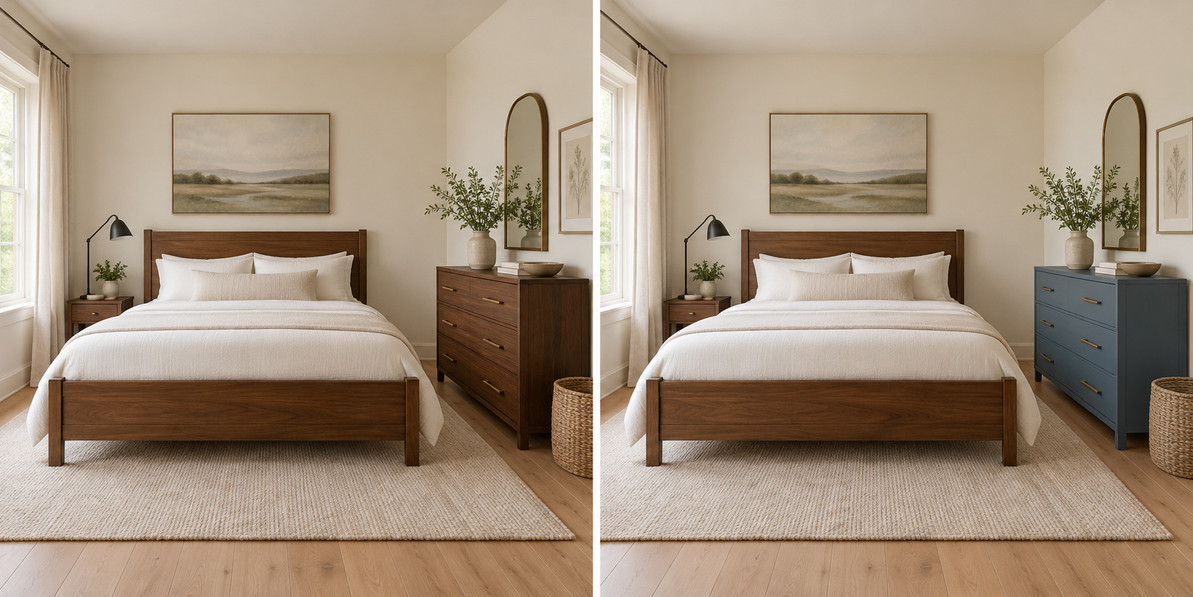
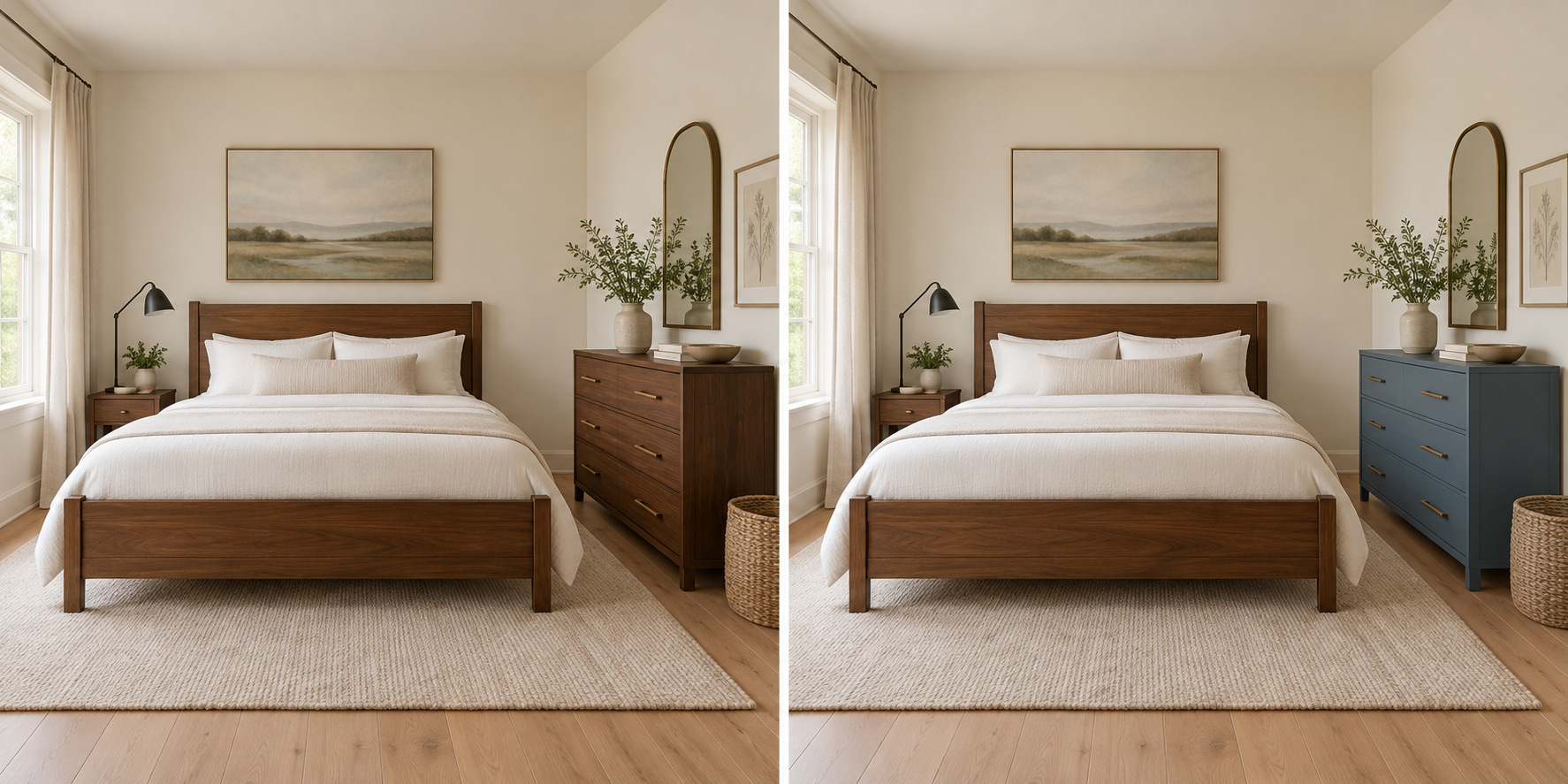
In the bedroom illustration, the bed stays while the dresser changes. The wood dresser adds another brown surface; the blue dresser adds a larger area of color. The bedding, rug and lighting give both arrangements the same backdrop.
For your own room, try a darker dresser beside a lighter wood bed and look at the whole arrangement. If two nearly similar finishes draw your eye to their differences, a clearer contrast may be more appealing. You can echo the darker tone in a picture frame or another small detail.
A rug is useful when furniture and flooring need some separation. Flooring maker Tarkett recommends textiles as a transition between wood tones. In a bedroom, try a rug that remains visible around the bed; in a dining area, consider its size with the chairs pulled out.
Let upholstery add another texture
A room with a wood table, wood flooring and a wood storage piece already has several large surfaces to consider. Upholstered chairs give you another way to bring the arrangement together.
Our Nabirye dining set with Nolan chairs, for example, pairs a dark oak-finish table with linen-upholstered chairs and salvage dark oak-finish legs. The upholstery changes the texture, while the table and chair legs stay within a dark wood color family.
If you are keeping an existing table, compare chair shape, upholstery and leg finish as a combination. The fabric may pick up a color from a rug or curtains, while the legs relate to the table.
Make the new piece a color accent
A painted cabinet can add useful storage and a fresh color to the room. Choose a color you enjoy, then compare its shape and decorative details with the furniture you are keeping.
The Andrea Antique Blue Mirrored Accent Cabinet brings together a blue finish, mirrored door fronts and four center drawers. It is an example of adding color and storage in one piece. Compare its decorative fronts with the rest of the room: beside a simple table, they can become the detail you notice.

Read the finish and the material separately
A finish name describes the appearance; the construction details describe what the piece is made from. Read both when comparing furniture.
The Nabirye table, for example, has a dark oak finish and a construction that includes poplar, oak veneer and MDF. Use the finish to judge how it will sit beside your existing furniture, and the material details to help compare care requirements and everyday use.
Use the same approach with any piece on your shortlist. Check the actual finish option and material description, then look at details such as handles, legs, upholstery and edge shapes. Those details may give you the connection you were trying to find in the wood color alone.
Try the shortlist against the real room
Put a shortlisted piece's photo beside your room photo and compare the whole scene. Look at the wall and floor as well as the two pieces. If you have a finish sample available, view it in the room by daylight and under the lamps you use in the evening. Lighting changes how colors appear.
Then check how the furniture will work there. Mark its footprint, allow for doors and drawers to open, and keep the route through the room usable. A cabinet beside a dining table needs space with chairs pulled out; a dresser needs access with its drawers open. Our furniture delivery guide helps you plan the route into the room, too.
For an exact finish match or an addition to an older collection, ask the team to check the specific pieces before you order.
Warmer finishes and individual accents were among the ideas Furniture Today highlighted at the Fall 2026 High Point Market. A useful way to bring that inspiration home is to choose one addition around the furniture you already enjoy.
Give Totally Home Furniture a starting point
Send the team a room photo, a photo of a piece you are keeping or an inspiration image. Add what you need the new piece to do and the space you have for it. We can help you compare the options around your room.

Recent Posts
-
Warm Wood Furniture: How to Mix Finishes Without a Matching Set
A room can feel pulled together even when the bed, dresser and nightstands came from different coll … -
Loft Beds for College Students: Off-Campus Bedroom Setups
Quick Nav Overview Why Does an Off-Campus Room Need a Different Loft Bed? Off-Campus Loft Bed Setu … -
Types of Beds Explained: Designs, Mattress Sizes and a Little History
Start with what you want from the room: a place for a child to relax, storage for a bedroom with a s …