
Durability Standards for Rental Property Furniture
Choose rental furniture by comparing how the exact model fits your guests, room layout, cleaning routine and maintenance plan. Look at construction, load limits, care instructions and repair options alongside purchase and setup costs. A useful durability standard gives you practical details to compare and a routine to follow between bookings.
Start with the job the furniture must do. A bunk in a family cabin, a dining chair used at every meal and a sleeper sofa opened each night face different demands. Compare each piece against its intended use rather than treating a material name, a large weight rating or the phrase “commercial grade” as a complete answer.
Define what “durable” means for your rental
Write a short brief for each room: who will use the furniture, how often it will be cleaned, which mechanisms will be operated and who will inspect it. Include the intended guest ages and sleeping arrangements for beds. For seating, consider the way guests sit, move the piece and use the surrounding space. For storage furniture, include drawer operation and the manufacturer's installation requirements.
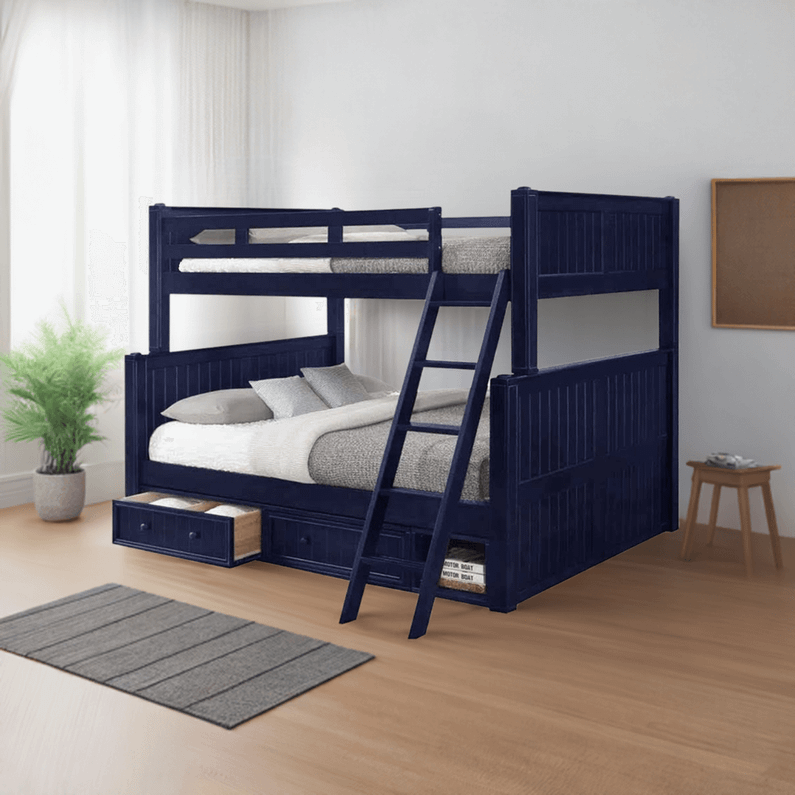
A customer furnishing a vacation rental described our Beatrice Queen over Queen Bunk Bed as well made and a good fit for the property in their Beatrice customer review. That real-world use is a helpful reference as you compare the size, access and upkeep requirements of a bed for your own rental.
Set practical purchase requirements before comparing prices. You may need accessible hardware, a finish compatible with your cleaning routine or a documented way to request a replacement component. Record an unanswered question as unresolved. Do not fill the gap with an assumption that a heavier frame or higher price settles it.
Ask what supports a durability claim
When a description uses “heavy duty” or “commercial grade,” look for the specific construction details or testing behind the claim. If a test is cited, check the standard, edition, model coverage and result. If a supplier provides a report, check that it covers the size and configuration you are buying. Testing a related chair, a different bed size or one component does not automatically establish the performance of the complete item.
| Claim or feature | Evidence to request | What remains to check |
|---|---|---|
| Commercial grade | Specific construction details and any named testing for the exact model. | What the claim establishes about the complete product and its use conditions. |
| High load rating | Limit for each component and the conditions behind the rating. | Mattress weight, intended users and operating restrictions. |
| Durable finish or fabric | Care instructions and relevant surface or fabric test information. | Compatibility with the actual cleaners and methods used at turnover. |
| Serviceable construction | Parts identification, assembly instructions and a replacement-parts process. | Availability, cost and lead time for the specific component. |
| Long warranty | Written coverage, exclusions and claim procedure. | Which exclusions apply and which repair costs remain your responsibility. |
Keep these documents with the order record. They give the owner, installer and cleaning team a shared reference when a question arises.
Separate safety requirements from service-life expectations
For bunk beds, start with the applicable safety requirements. The CPSC's bunk-bed guidance identifies federal requirements for adult and children's bunks and the corresponding manufacturer or importer certification responsibilities. It also identifies ASTM F1427 as an industry consensus standard covering additional design and performance requirements. Ask the supplier for applicable documentation rather than treating a marketing label as proof.
These requirements address specific hazards and performance criteria. They are not a promise that a bed will remain maintenance-free for a particular number of rental seasons. Likewise, UL GREENGUARD certification concerns low chemical emissions; it does not by itself establish a frame's load capacity or resistance to wear.
Follow the exact bunk's instructions and mattress limits. Required bunk-bed instructions prohibit more than one person on an upper bunk and prohibit children under six from using it. A wide mattress or large published load rating does not override those restrictions.
Compare the complete construction, not just the material
Look beyond “wood” or “metal” to the frame, joints, rails, mattress supports, legs and access components. Ask how the parts connect, which supports must contact the floor and how the manufacturer wants fasteners checked. Drawers, trundles and sleeper mechanisms add their own components and care requirements.
For a concrete example, the Annapolis Blue Full over Queen Bunk Bed listing specifies rubberwood construction, 3-inch square posts, metal-to-metal rail connectors and 3 mm metal corner brackets. Its sleeping surfaces are Full XL above and queen below. In a customer review of this model, the buyer described the bunk as sturdy and expressed satisfaction with the purchase. That is an owner's impression of the assembled bed; the specification list gives you the construction details to compare.
On a comparison sheet, record the Annapolis frame material, posts and rail connectors under “construction.” Add the Full XL-over-queen layout under “room and guest fit.” Then note the cleaning method, inspection tasks and route for requesting replacement parts. This keeps the features you value and the ongoing work of ownership in the same comparison.
If you are considering adult bunk beds, verify the requirements for the intended sleepers and every selected add-on. Our guide to how many beds your vacation rental needs connects the bed mix to the guest group, permitted occupancy and turnover routine.
Match the finish and fabric to your cleaning routine
Give the supplier the cleaning products and methods your team actually uses. Request written care instructions for the specific finish or upholstery, including any restrictions on moisture, abrasives, solvents or disinfectants. Do not assume a cleaner suitable for one surface is approved for another, or that a removable cover is machine washable.
For upholstered seating, abrasion results are one piece of the specification. The Association for Contract Textiles cautions against using high abrasion results to predict lifespan. Consider seams, cushions, the frame and care requirements as well. A large fabric test number does not establish the durability of an entire sofa.
Make the approved care routine easy for the cleaning team to find. If the recommended method is impractical between bookings, resolve that mismatch before buying rather than planning to use an unapproved shortcut.
Confirm repair options and rental-use warranty terms
Ask how to identify and request the exact replacement part: a rail connector, drawer glide, slat, ladder component or sleeper-mechanism part. Confirm whether it is available separately, who supplies it and what information is needed. Availability and lead time can change; the existence of a parts list is not a promise of immediate stock.
Totally Home Furniture's products are not warrantied for commercial use, including vacation rentals. Customers do choose our beds for these settings, as the Beatrice review above illustrates. Consider the model's construction, operating limits and care needs alongside this coverage limitation, and budget for maintenance or replacement costs that remain your responsibility.
For planning, compare purchase and setup costs alongside likely maintenance work and the consequences of taking a piece out of service. Use your own operating records for any replacement or downtime estimate. Avoid assigning every model an unsupported number of years of service.
Build a check into each turnover
Have the installer follow the manufacturer's assembly sequence and retain the instructions, model information and spare hardware as directed. Give the turnover team a short visual check: missing or loose parts, damaged supports, unstable movement, sharp damage and mechanisms that no longer operate as intended. Follow the manufacturer's inspection and maintenance schedule in addition to this routine.
If the team finds structural damage or an unstable bed, keep it out of guest use until it has been assessed and properly resolved. Use approved replacement parts and repair instructions; do not improvise a structural fix to meet a check-in deadline. Record the issue and completed work so the next person knows what was done.
Before ordering: save one record for each model
Use this five-point checklist with the supplier's documents. Mark each item confirmed or unresolved and note where the answer is recorded.
- Exact model and options: record the size, finish and any drawers, trundle or other add-ons.
- Guest use and ownership costs: record the intended sleepers, use restrictions and costs you will be responsible for.
- Operating limits: save the assembly instructions, load limits and mattress requirements where relevant.
- Cleaning and upkeep: confirm approved products and methods, inspection tasks and who will carry them out.
- Repair route: record the parts contact, how to identify components and any quoted availability or lead time.
For a specific purchase, send our personal shoppers your intended use, room measurements, shortlisted models and any unresolved items from this checklist. We can help you identify the product details to confirm before ordering.

Recent Posts
-
A Bunk Bed for One Child: Room for Everyday Life and Future Plans
One child can have plenty of reasons to keep a bunk bed: a favorite sleeping level, a reading spot … -
More Beds, Not More Bedrooms: What an Extra Sleeping Spot Is Worth to a Short-Term Rental
Quick Nav Overview Why Guest Count Sets Your Rate Before Bedroom Count Does What One Extra Sleepin … -
Bunk and Loft Bed Delivery: What to Expect and How to Prepare
Your guide to receiving and setting up bunk beds, loft beds and other Totally Home furniture—includ …