
How Long Do Bunk Beds Last? Lifespan by Material Type, Use, and Safety Condition
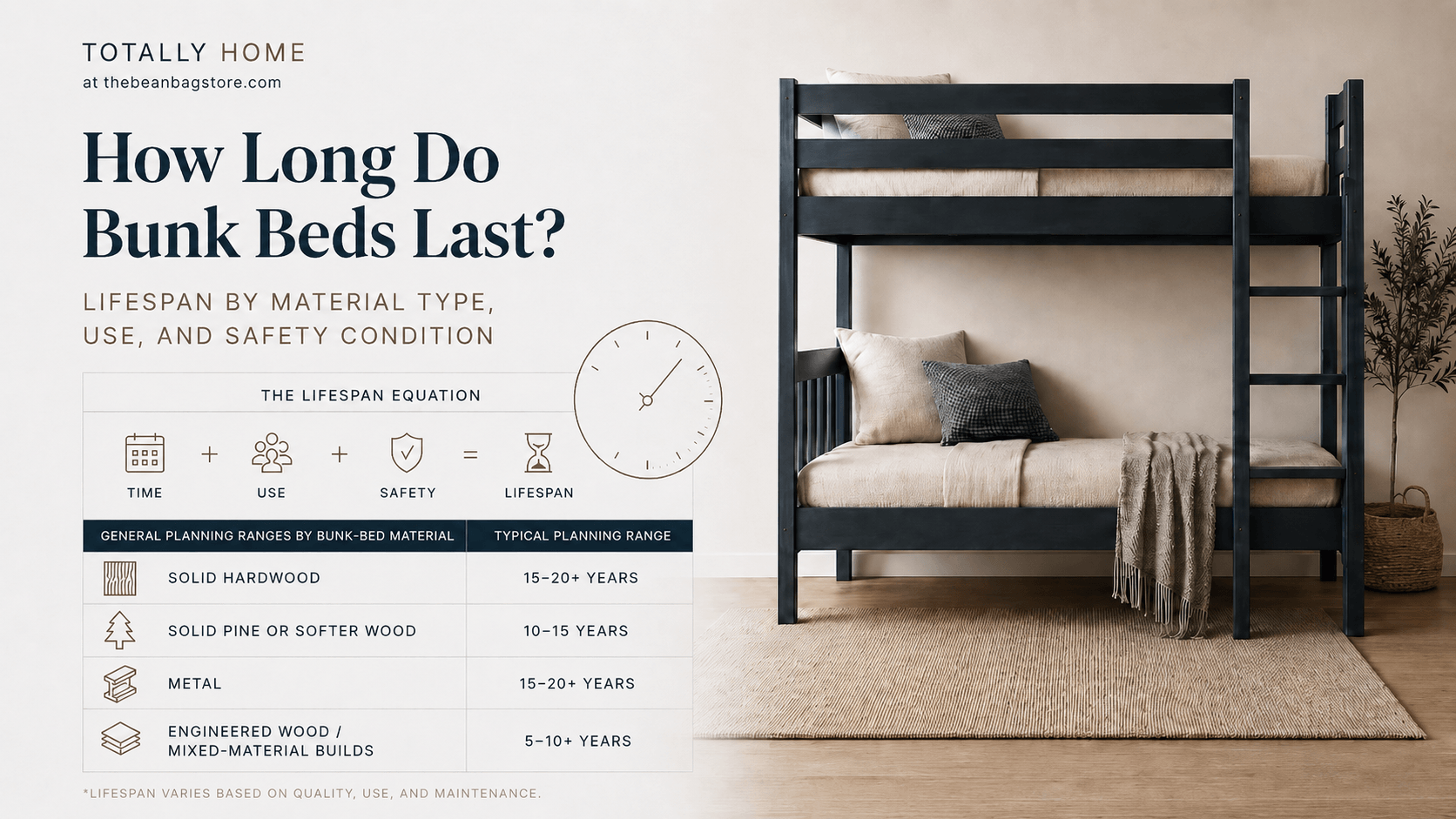
Most families ask how long bunk beds last because they want to know whether a bed is still worth using, moving, repairing, or replacing. The better question is slightly different: is the bunk bed still structurally sound for the people, mattress, and room it is being used with now?
A bunk bed can look fine and still be wrong for a thicker mattress, a heavier teen, a rental property, or a room where the ladder path is crowded. This guide gives material-based lifespan ranges, then walks through a practical inspection system so you can decide whether to keep, repair, retire, or replace a bunk bed.
- Typical lifespan ranges by material
- Lifespan vs. safe service life
- The 5-minute inspection scorecard
- How each material ages
- What shortens bunk-bed lifespan
- Maintenance schedule
- Vacation rental and commercial-style use
- Repair, retire, or replace?
- How to buy for a longer lifespan
- Useful shopping and reading paths
- Frequently asked questions
Typical Bunk Bed Lifespan Ranges by Material
These ranges are planning guidance, not guarantees. A high-quality bed that is assembled correctly, used within its stated weight capacity, kept dry, and inspected regularly can outlast a cheaper bed made from the same broad material category.
| Material type | Typical planning range | What usually determines the real lifespan | Best fit |
|---|---|---|---|
| Solid hardwood | 15–20+ years | Joinery, post thickness, rail hardware, slat support, maintenance, and whether the frame can stay tight through years of use. | Long-term family use, teens, adults, guest rooms, and vacation homes. |
| Solid pine or softer wood | 10–15 years | Softwood can perform well, but dents, compressed screw holes, and loosened joints may show up earlier than on denser hardwood frames. | Kids’ rooms where the bed will be used normally and checked periodically. |
| Metal | 10–20 years | Weld quality, corner supports, rust prevention, hardware, ladder attachment, and whether the frame develops recurring squeaks or flex. | Modern rooms, rental spaces, or households that prefer a lighter visual profile. |
| Engineered wood / mixed-material builds | 5–10+ years | Moisture exposure, fastener retention, surface wear, veneer damage, and whether load-bearing parts are solid enough for daily use. | Shorter-term needs, lower-traffic rooms, and budget-sensitive setups. |
| Unknown, homemade, heavily modified, or unlabeled secondhand beds | Do not rely on age estimates | If you cannot identify the model, mattress limit, hardware, or recall status, inspect very conservatively. | Only use if the bed can be identified, fully assembled with correct parts, and verified against the manufacturer’s instructions. |
Lifespan Is Not the Same as Safe Service Life
A bunk bed’s lifespan is how long it remains useful furniture. Its safe service life is how long it remains appropriate for the sleeper, mattress, and room setup. Those are not always the same.
Still useful
The frame is stable, the correct mattress fits, the guardrails and ladder attach securely, and the bed is being used within the manufacturer’s limits.
Needs attention
Hardware loosens, a rail squeaks, a slat shifts, or the mattress is close to the stated maximum thickness. Inspect, tighten, and confirm the original instructions before approving continued use.
Stop using
The bed wobbles after tightening, has cracked wood, bent metal, broken welds, missing guardrails, substitute hardware, an unknown model, a recall issue, or an upper mattress that compromises guardrail height.
Federal bunk-bed guidance focuses on preventing falls and entrapment. CPSC guidance defines a bunk bed as a bed whose mattress foundation is more than 30 inches from the floor and requires upper-bunk guardrails, mattress-size and thickness instructions, permanent labeling, and other structural safeguards. That matters for lifespan because a bed with missing labels, missing instructions, or compromised rails is not just “old”; it may be impossible to verify for safe use.
The 5-Minute Bunk Bed Lifespan Scorecard
Use this scorecard before handing down a bunk bed, moving it to a new room, buying used, approving an older child for the upper bunk, or setting up a vacation rental. The goal is not to assign a perfect numerical score. The goal is to catch the items that make a bed unsafe even when it still looks attractive.
| Inspection point | Green: keep using | Yellow: fix or verify first | Red: stop using the bunk bed |
|---|---|---|---|
| Label and instructions | Manufacturer, model, date, mattress size, and maximum mattress thickness are known. | Instructions are missing but the manufacturer can provide the exact manual. | No label, no model number, no manual, no mattress limit, or no reliable way to check recalls. |
| Overall movement | Frame stays stable when gently shaken at the posts. | Minor movement improves after tightening original hardware. | Wobbling returns quickly, one side flexes, or the bed feels unstable after tightening. |
| Guardrails | Rails are present on the upper bunk, installed as directed, and firmly attached. | A rail is loose but can be secured with manufacturer-approved hardware. | Rail is missing, cracked, bent, modified, or removable without proper fastening. |
| Ladder or stairs | Access point is secure, aligned, and easy to climb without shifting. | Hardware needs tightening or a stair drawer needs adjustment. | Ladder moves, hooks loosely, has bent rungs, cracked steps, stripped fasteners, or substitute parts. |
| Slats and mattress foundation | Slats are intact, evenly spaced, supported, and attached where required. | A slat is loose and can be reattached according to the manual. | Broken slats, missing center support, sagging deck, cracked support rails, or unsupported mattress. |
| Mattress fit | Mattress size and thickness match the product label and manual. | Mattress fits the frame but the thickness limit needs verification. | Mattress is too thick, too small, slides, leaves unsafe gaps, or reduces the effective guardrail height. |
| Wood condition | No cracks at posts, rails, ladder, slat cleats, or connection points. | Cosmetic dents or finish scratches only. | Split wood, crushed screw holes, cracked posts, soft spots, water swelling, or repeated joint failure. |
| Metal condition | No rust-through, cracked welds, bent rails, or sharp edges. | Surface scuffs or minor finish wear only. | Cracked welds, bent support pockets, rusted load-bearing areas, sharp metal, or a frame that has collapsed before. |
| Room setup | Ladder path is clear, night route is visible, and surrounding furniture is anchored when needed. | The bed is sound, but the room needs cleanup, lighting, or anchoring before use. | Ceiling fan, window cord, unanchored climbing furniture, blocked ladder path, or insufficient clearance creates a predictable hazard. |
How Each Material Ages
Solid hardwood bunk beds
Hardwood often has the longest practical lifespan because dense posts and rails can resist vibration, compression, and day-to-day impact. The important details are the joinery and hardware: look for solid rail connections, strong corner brackets, tight slat support, and posts that do not twist or split.
For long-term family or guest use, browse wooden bunk beds. A product such as the Foster Espresso Queen Size Bunk Beds is a good example of the features worth checking because the product page calls out hardwood construction, 3-inch posts, metal-to-metal rail connectors, corner brackets, stated weight capacity, mattress guidance, and separation into two beds.
Softwood and pine bunk beds
Pine and other softer woods can be a practical choice, especially for children’s rooms, but they are more likely to show dents, worn finish, compressed fastener holes, and joint looseness if the bed is frequently climbed, jumped on, or moved. The bed may remain usable for years, but it needs more attention to tightening and surface wear.
When buying softwood, prioritize solid slat support, clear weight limits, and hardware that can be tightened without stripping the frame.
Metal bunk beds
Metal frames can last a long time, but their failure points look different. Inspect welds, bolt holes, ladder attachment points, corner supports, mattress-support tabs, rust, paint chips, and any bend in load-bearing rails. A squeaky metal bed is not automatically unsafe, but recurring flex or cracked welds are not maintenance issues; they are replacement signs.
For this category, compare metal bunk beds. The South Bank Full over Full Metal Bunk Beds is a relevant internal example because it combines a metal frame, full-size layout, upper guardrails, and a built-in ladder.
Engineered wood and mixed-material bunk beds
Engineered wood can be useful when the design is well-supported and used gently, but it is more vulnerable to moisture, swelling, veneer damage, and stripped fasteners. Inspect around bolts and cam locks carefully. Once a load-bearing connection in engineered wood will not stay tight, the bed’s safe service life may be near its end.
Mixed-material beds should be judged by their weakest load-bearing connection, not by the strongest-looking material on the frame.
What Shortens a Bunk Bed’s Lifespan?
The same bed can last very different lengths of time in two homes. A bunk bed used by two calm elementary-age children in one room is not under the same stress as a bunk used by teens, adults, sleepover guests, or a vacation rental with constant turnover.
Heavy or changing users
Kids become teens, teens become adults, and vacation homes host mixed sleepers. Always compare current sleepers to the stated capacity. For adult or rental use, start with adult bunk beds or high-capacity heavy-duty bunk beds rather than assuming a children’s bunk will scale up.
Frequent disassembly
Moving a bunk bed between rooms, homes, or renters can wear fastener holes, damage labels, misplace hardware, and introduce assembly errors. Bag and label original hardware before every move.
Rough use
Jumping, hanging from rails, climbing the frame instead of the ladder, or having more than one person on the upper bunk can loosen joints and shorten the safe service life.
Wrong mattress
A replacement mattress that is too thick can reduce guardrail protection. A mattress that is too small can leave gaps. Always follow the product’s mattress size and maximum thickness instructions.
Moisture and heat
Humidity, water leaks, damp carpets, and direct heat can warp wood, swell engineered panels, corrode metal, and weaken finishes.
Missing or substitute parts
A bunk bed is a system. Random bolts, improvised slats, removed guardrails, or a different ladder can change how the bed carries load and protects the sleeper.
A Simple Maintenance Schedule
Bunk beds do not need complicated maintenance, but they do need regular checks. Vibration, climbing, bedding changes, and sleepovers all place repeated stress on the same connections.
| When | What to check | Why it matters |
|---|---|---|
| After assembly, then again after 1–2 weeks | Bolts, side rails, ladder or stairs, slats, guardrails, and mattress fit. | The first few nights of use can reveal small alignment or tightening issues. |
| Monthly for kids’ rooms | Loose hardware, ladder path, guardrail attachment, cracked slats, and toys or rugs near the ladder. | Children’s rooms change constantly, and the safety issue is often the room around the bed rather than the bed alone. |
| Every 3–6 months | Full frame shake test, slat support, connection points, wood cracks, metal bends, rust, and mattress thickness. | This catches the gradual wear that does not show up during normal bed making. |
| Before sleepovers | Age, one-sleeper rule, ladder rules, hardware, and guest size relative to the weight rating. | Sleepovers often bring excitement, unfamiliar habits, and guests who do not know the house rules. |
| After moving or reassembly | Recheck the manual, use original hardware, confirm guardrail placement, and tighten in the correct order. | A bunk bed can be safe in one assembly and unsafe after being rebuilt with missing or incorrect parts. |
| During each vacation-rental turnover | Check guardrails, ladder or stairs, slats, hardware, mattress thickness, floor clearance, night-light access, ceiling-fan clearance, and room hazards. | High-turnover rooms need a faster inspection rhythm because different guests use the same bed in different ways. |
Commercial and Vacation-Rental Use: Airbnb, Vrbo, Cabins, and Bunk Rooms
Bunk beds in short-term rentals age differently than bunk beds in a family bedroom. A vacation home, Airbnb, Vrbo, lodge, cabin, or high-occupancy guest room may have dozens of different sleepers in a season. Guests may be adults, teens, kids, or mixed groups, and they may not know the house rules before they arrive.
Important distinction: a privately owned short-term rental is not the same thing as a dormitory, camp, shelter, or other institutional facility. Still, rental use creates commercial-style wear. Before using a bed in a revenue-producing property, verify the product’s stated weight capacity, mattress limits, warranty language, replacement-part availability, local short-term-rental rules, and insurance requirements.
| Rental situation | What changes | Better owner decision |
|---|---|---|
| Occasional family cabin | Use may be seasonal, but the bed may sit in humidity, heat, or cold between visits. | Inspect at the start of each season, before guest visits, and after the bed is moved or reassembled. |
| Airbnb, Vrbo, or vacation home | Guests vary in age, size, mobility, and ladder habits. Cleaning staff may be the first to notice damage. | Use a turnover checklist and consider adult bunk beds, high-capacity heavy-duty bunk beds, or bunk beds with stairs when adults or mixed-age groups may use the room. |
| Large bunk room | More sleepers usually means more climbing, luggage, bedding changes, and repeated contact with ladders, stairs, rails, and posts. | Prioritize wide access, reinforced construction, clear floor paths, luggage storage, and written guest rules. |
| Institutional or regulated lodging use | Requirements may depend on building codes, licensing, fire-safety rules, procurement standards, or facility type. | Do not assume a normal residential product is appropriate. Confirm suitability with the manufacturer, local authority, insurer, and property operator before purchase. |
Before buying for a rental
- Confirm the weight capacity for each sleeping surface, not just the total bed.
- Confirm whether the product documentation or warranty allows rental, commercial, or high-turnover use.
- Choose the correct mattress size and maximum thickness so the guardrail remains effective.
- Prefer stairs, wide ladders, or clearly placed ladders when guests may be adults or unfamiliar with the room.
- Check ceiling height, ceiling-fan placement, light fixtures, windows, outlets, and the ladder path before ordering.
During each turnover
- Hand-check guardrails, ladder or stair attachment, slats, support rails, and visible hardware.
- Look for cracked wood, bent metal, loose welds, missing fasteners, stripped holes, rust, or sharp edges.
- Confirm the upper-bunk mattress has not been swapped, topped, or replaced with one that is too thick.
- Clear luggage, rugs, toys, cords, and furniture from the access path.
- Report and remove the bed from service if wobble, damage, or missing parts are found.
| Where to document it | What to include | Why it helps |
|---|---|---|
| Listing description | State that the room includes a bunk bed, the mattress sizes, and whether stairs or a ladder are used. Airbnb specifically treats a bunk bed as two beds when it is selected as a sleeping arrangement. | Guests can decide whether the setup fits their group before booking. |
| Listing photos | Show the full bunk bed, access side, guardrails, floor path, and room around the bed. | Clear photos reduce surprises and help prevent guests from misusing the bed because the layout was unclear. |
| House manual | Include one sleeper on the upper bunk, no horseplay, no children under 6 on the upper bunk, ladder or stair use only, and no mattress toppers on the upper bunk. | Guest-facing rules are easier to follow when they are written before a problem occurs. |
| Cleaner or turnover checklist | Add a short bunk-bed inspection line item: rails, ladder/stairs, slats, hardware, mattress thickness, ceiling clearance, and hazards around the bed. | Turns safety checks into a repeatable operating process instead of an occasional owner task. |
| Owner records | Keep the manual, model number, purchase date, hardware list, replacement-part contacts, and inspection notes. | Useful when parts are needed, a recall must be checked, or the property changes managers. |
For rental-focused planning, read Bunk Beds for Airbnb: Maximizing Guest Capacity Without Sacrificing Reviews and How More Beds — Not More Bedrooms — Can Drive Better Bookings and Higher Rates. If the room needs to support adults or mixed groups, compare larger examples such as the Bellamy Queen Bunk Bed or the stair-access Kallista Dual Height Full over Queen Bunk Bed with Stairs against your room measurements, guest profile, and maintenance plan.
Should You Repair, Retire, or Replace the Bunk Bed?
Some issues are normal maintenance. Others are structural. The line matters.
Usually reasonable to maintain
- Tightening original bolts and screws according to the manual.
- Replacing a missing bolt with the manufacturer-approved part.
- Touching up cosmetic finish scratches.
- Replacing a mattress with the correct size and thickness.
- Re-leveling a bed after moving it across the room.
Verify before continued use
- A squeak that disappears after tightening.
- A loose ladder that needs the correct fastener.
- A slat that shifted but is not cracked.
- Secondhand assembly without a manual.
- A bed being reassigned from younger kids to teens or adults.
Replace or stop using
- Cracked posts, rails, ladder steps, support cleats, or slats.
- Bent metal, cracked welds, rusted support areas, or sharp edges.
- Guardrails that cannot be secured.
- Recurring wobble after tightening.
- Missing model information or a product recall.
- Modified structure, substitute ladder, removed rail, or improvised hardware.
Do not improvise structural fixes. Adding boards, drilling new holes, swapping ladders, cutting rails, or replacing load-bearing parts with hardware-store guesses can change how the bed was designed to carry weight and prevent falls or entrapment. When a repair affects structure, use manufacturer-approved parts or replace the bed.
Buying or Inheriting a Used Bunk Bed
A hand-me-down bunk bed can be a good value, but only if it can be identified and inspected. A used bed with no manual, no mattress limit, no model number, and unknown hardware is harder to verify than a new bed with visible specifications.
| Question | What you want to see | When to walk away |
|---|---|---|
| Can you identify the exact bed? | Manufacturer, model number, manufacture date, and product page or manual. | The seller only knows “it’s a wooden bunk bed,” or labels were removed. |
| Are all original parts included? | Guardrails, ladder or stairs, slats, support rails, brackets, and hardware. | Missing guardrails, improvised slats, substitute screws, or a different ladder. |
| Can you check the recall status? | Brand and model are clear enough to search CPSC recalls. | The bed cannot be identified or has an unresolved recall. |
| Is the mattress information known? | Correct mattress size and maximum upper-bunk thickness are stated. | No one can verify the correct mattress, or the included mattress is visibly too thick or too small. |
| Has it been modified? | No extra drilled holes, cut rails, added platforms, or repaired load-bearing parts. | Any structural modification was made outside manufacturer instructions. |
How to Buy a Bunk Bed That Lasts Longer
Durability is not just “wood versus metal.” The longer-lasting choice is the one that matches the room, the sleepers, and the use case. Start with the hardest requirement, then shop from there.
For long-term family use
Look for solid wood or well-built metal, clear weight capacity, secure ladder or stairs, replaceable parts, and a design that works as children become teens. The full bunk beds category is the broadest starting point.
For taller teens and adult guests
Choose XL or queen sizing rather than outgrowing a standard twin. The XL and queen bunk beds category is useful when lifespan depends on physical fit. The Eberhardt Black Twin XL Bunk Beds are a relevant example because Twin XL adds length for growing kids, teens, or adults.
For frequent guest or rental use
Shop by stated capacity, adult-friendly sizing, access design, and construction details first. A high-capacity frame may cost more up front, but it can be the better long-term choice when guests vary in size. Use the vacation-rental checklist above before choosing a model. The Crystal White Bunk Bed with Queen on Bottom product page lists a high stated capacity and GREENGUARD Gold designation, which are useful comparison points for heavy-use rooms.
For younger school-age kids
Stairs can make nightly access easier and may reduce risky climbing habits. Compare bunk beds with stairs. The Rylan Gray Bunk Beds with Stairs are a useful example because the product page describes built-in stair drawers and notched treads.
Useful Shopping and Reading Paths
Use these internal resources based on the decision you are trying to make, rather than browsing every bunk-bed page at once.
Shop by durability need
- Wooden bunk beds for long-term furniture-style durability.
- Metal bunk beds if you prefer metal construction and want to compare welds, ladders, and support systems.
- High-capacity heavy-duty bunk beds for older teens, adults, rentals, and guest rooms.
- Adult bunk beds when the room is not primarily for younger children.
Shop by layout problem
- Bunk beds with stairs for easier access and built-in storage options.
- XL and queen bunk beds for taller sleepers or mixed guest rooms.
- Bunk beds with desks when the room must support sleep and work in one footprint.
- Kids bunk beds for child-focused configurations.
Read before deciding
- At What Age Can Kids Sleep on the Top Bunk? for age and readiness checks.
- Bunk Bed Rules: Teaching Kids Safe Sleep Habits for house rules that protect the bed and the child.
- Safety Considerations for Bunk Beds for a broader safety overview.
- Bunk Beds for Airbnb for rental-specific layout and guest-capacity planning.
- How More Beds Can Drive Better Bookings for the short-term-rental business case.
Plan the next room update
- What Is the Difference Between a Bunk Bed and a Loft Bed? if you are comparing raised-bed formats.
- Pros and Cons of Bunk Beds for Adults if the bed may serve adult guests.
- Kids Bedroom Furniture That Grows With Them for longer-term room planning.
- When Should Kids Transition from Crib to Toddler Bed to Bunk or Loft Bed? for younger-child timing decisions.
Frequently Asked Questions
How long should a good wooden bunk bed last?
A well-built wooden bunk bed can last 10–20+ years, depending on the wood, joinery, hardware, weight capacity, maintenance, and how heavily it is used. Hardwood frames often have the longest planning range, but only if the guardrails, ladder, slats, and connection points remain sound.
Do metal bunk beds last longer than wood bunk beds?
Not automatically. A quality metal bunk bed can last many years, but welds, support pockets, ladder attachments, rust, and recurring frame flex matter more than the material label alone. A quality wood frame and a quality metal frame can both last well when used within their ratings.
When should I replace a bunk bed instead of tightening it?
Replace or stop using the bunk bed if it still wobbles after tightening, has cracked load-bearing wood, bent metal, broken welds, missing guardrails, unstable stairs or ladder, unknown mattress limits, substitute hardware, or any unresolved recall issue.
Do bunk beds last as long in Airbnb, Vrbo, or vacation-rental use?
Usually not. A well-built bunk bed can still be a good rental choice, but high-turnover use accelerates wear because sleepers vary in size and behavior. Rental owners should inspect during each turnover, choose adult-appropriate capacity when adults may use the room, and remove the bed from service if recurring looseness or structural damage appears.
Can I keep using an old bunk bed if it feels sturdy?
Possibly, but do not rely on feel alone. Verify the model, manual, mattress thickness limit, guardrail setup, ladder or stair attachment, slats, hardware, and recall status. A bed that feels sturdy may still be wrong for a thicker mattress or heavier sleeper.
Is it safe to buy a used bunk bed?
It can be, but only if you can identify the exact model, confirm it is not recalled, obtain the correct instructions, verify all original parts are present, and inspect the structure carefully. Avoid used bunk beds with missing labels, missing rails, substitute hardware, or structural modifications.
Does separating a bunk bed into two beds extend its lifespan?
It can. If the product is designed to separate into two beds, using it that way may reduce climbing stress and upper-bunk wear. Do not separate a bunk bed unless the manufacturer designed and instructed it for that use.
What is the most common maintenance mistake?
The most common mistake is waiting until the bed feels loose. Hardware, guardrails, slats, and ladder or stair connections should be checked before problems become obvious, especially after assembly, moving, sleepovers, or rental use.
Source note: Lifespan ranges are practical planning guidance, not product guarantees. Safety-related checks are based on CPSC bunk-bed guidance, 16 CFR Part 1513 requirements, CPSC furniture tip-over guidance, platform host guidance for accurate sleeping-arrangement disclosure and routine safety practices, and the manufacturer instructions for the specific bed being used. Always follow the product manual and contact the manufacturer, retailer, property insurer, or local authority when parts, labels, mattress limits, assembly steps, rental suitability, or local lodging requirements are unclear.

Recent Posts
-
A Bunk Bed for One Child: Room for Everyday Life and Future Plans
One child can have plenty of reasons to keep a bunk bed: a favorite sleeping level, a reading spot … -
More Beds, Not More Bedrooms: What an Extra Sleeping Spot Is Worth to a Short-Term Rental
Quick Nav Overview Why Guest Count Sets Your Rate Before Bedroom Count Does What One Extra Sleepin … -
Bunk and Loft Bed Delivery: What to Expect and How to Prepare
Your guide to receiving and setting up bunk beds, loft beds and other Totally Home furniture—includ …