
Types of Beds Explained: Designs, Mattress Sizes and a Little History
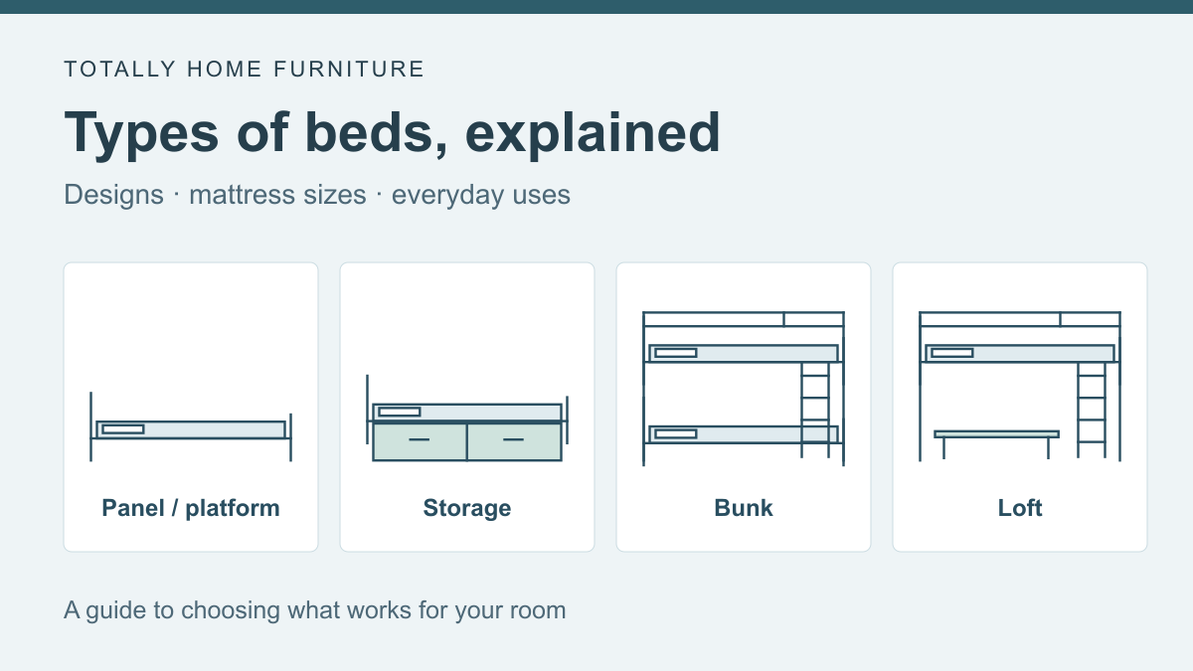
Start with what you want from the room: a place for a child to relax, storage for a bedroom with a small closet, a bed ready for guests or a look you love. Then compare the bed types that can help you create it.
Bed type, mattress size and style describe different parts of the same choice. A Queen upholstered platform storage bed, for example, tells you its mattress size, covering, support and storage design.
Choose the job your bed needs to do
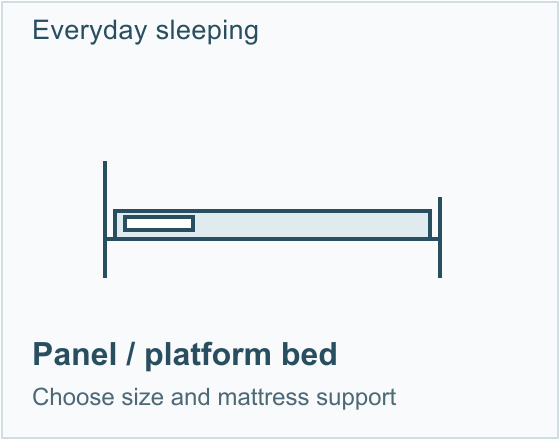
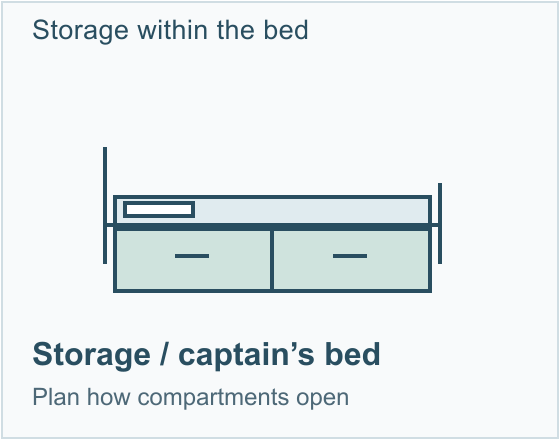
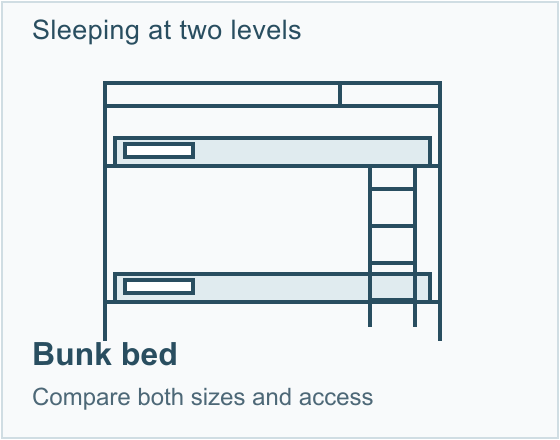
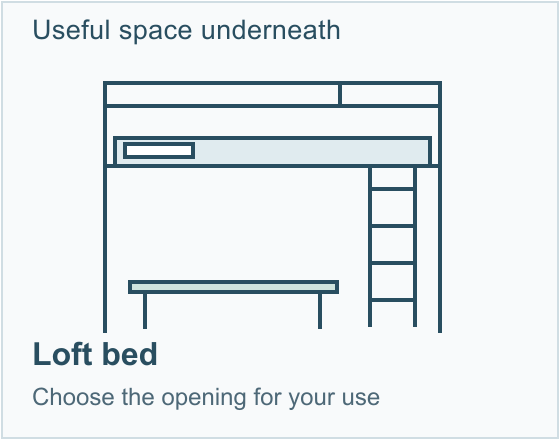
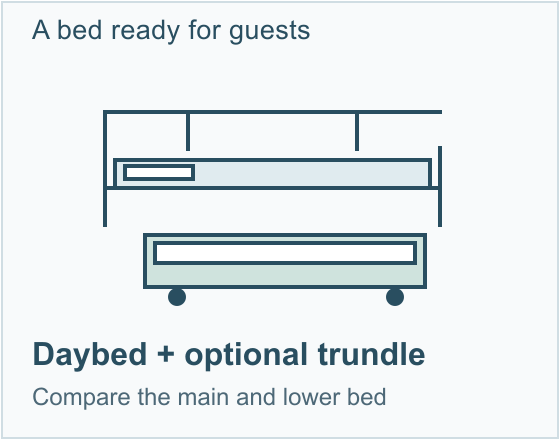
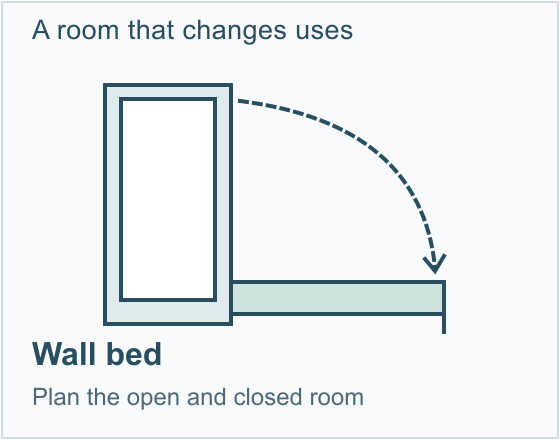
Six starting points for comparing bed arrangements. The guest-bed illustration shows a daybed with a separate trundle beneath it.
Think through an ordinary day and an occasional one: where you read, what you need to store and who might stay over. Add the look you want the room to have. Use those priorities to compare the bed arrangements below.
Bed types, explained by how you use them
Panel and platform beds: the everyday starting point
A panel bed usually has a headboard and footboard joined by side rails. A platform bed supports the mattress on a built-in deck or slat system. Panel describes the frame’s construction and appearance; platform describes the support, so the terms can overlap.
For a bedroom that already has enough storage, a simple frame can keep the focus on bedding, artwork or a headboard you love.
Our Stella White Platform Bed Frame has panel-style ends and included Euro-slats, with separately priced storage or trundle options. Match the bed’s support system to the requirements of your chosen mattress.
Storage, captain’s and bookcase beds: give belongings a place
A storage bed puts usable storage into or beneath the frame. Captain’s beds typically organize drawers below the mattress. A bookcase bed adds shelves at the headboard; it may also have drawers. Lift-up storage beds open beneath the mattress platform, a design often called an ottoman bed in UK listings.
In a child’s room with a small closet, underbed drawers can give everyday clothes a home. A bookcase headboard can put bedtime books within reach when there is little space for a bedside table.
Think about what you will store. Bed linens, clothes and books need different kinds of access. A bedside table can block a drawer, while a tall headboard can affect where a bed sits beneath a window. Compare drawer openings, shelf depth and the space you will use to reach everything.
For a room that also needs a desk, our loft-versus-captain’s-bed guide compares storage in the bed with making room beneath a raised bed.
Bunk beds: two sleeping levels, several ways to use them
A bunk bed has sleeping surfaces at different heights. Twin-over-Twin describes the upper and lower mattress sizes; Full-over-Queen or Queen-over-Queen describes a different combination. L-shaped and triple arrangements change the layout again.
Our Lily White Queen over Queen Bunk Bed has two Queen sleeping surfaces and separately priced underbed storage or a Twin XL trundle. Include the ladder in your room plan.
In a shared room, stacking the sleeping places can free floor space for play or other furniture. A single child might enjoy choosing a level for reading or sleeping and keeping a bed ready for a visiting cousin. Our guide to a bunk bed for one child explores those everyday choices.
Keep children under six off the upper bunk, and use the mattress size and maximum thickness specified for the bed. Our bunk-and-loft comparison explains the two layouts in more detail.
Loft beds: use the space beneath the mattress
A loft raises one sleeping surface to make space below for a desk, storage, seating or another activity. Low lofts and high lofts create different openings; choose the height around the use you have in mind.
If a child already has a desk elsewhere in the room, a beanbag and a basket of books beneath the loft can make a relaxing spot for reading or listening to music. The open area can also become a hobby corner or a place for storage as interests change.
For an adult furnishing a compact city apartment or high-rise studio, a loft can put the sleeping area above a home-office setup or a reading nook. That can leave another part of the room free for dining, hobbies or everyday seating.
Our Crystal White XL College Loft Beds come in Twin XL and Full XL sizes with a 2,000-pound weight capacity and open space below. A desk or dresser is chosen separately. Compare the furniture and the person using it with the actual opening beneath the bed, as well as the headroom above the mattress.
The adult-loft fit guide walks through those two measurements and the space needed for a working area.
Daybeds: a bed that welcomes daytime lounging
A daybed is arranged for sleeping and sitting, often with a back and two ends that hold pillows along its long side. It can give a bedroom, office or guest room a comfortable place to lounge while keeping a mattress ready for the night.
In a teen’s room, a daybed can be a place to stretch out with a book or sit with a friend after school, then sleep at night without converting the frame.
Casey’s White Kids Daybed comes in Twin and Full sizes and offers optional drawers, cubbies or a Twin storage trundle. The daybed is the main frame; the trundle is an additional lower bed. Our daybed-versus-regular-bed guide can help you decide which arrangement suits the room.
Trundle beds: bring out another sleeping surface
A trundle is a separate low bed that pulls out from beneath the main bed. It can add a sleeping place to a conventional bed, daybed or bunk.
A child who has a room to themselves can keep the floor open most days and pull out the extra bed when a cousin stays over. In a guest room, it can provide another sleeping place for a visiting family.
For example, the Full Beatrice White Kids Bed offers a Full storage trundle as a separate option. Check the main bed and lower bed sizes independently, then plan the room with the complete trundle pulled out.
One Brockton XL reviewer chose storage drawers for one bunk and a trundle for another. Think about which use would serve each room best: more storage or another place to sleep?
Our trundle selection guide compares compatible options and shows how to plan the open layout.
Wall, Murphy and cabinet beds: put the bed away
A wall bed, often called a Murphy bed, pivots up into an upright housing. A cabinet bed unfolds from a freestanding cabinet-style piece.
A room used for exercise or crafts can become a guest bedroom when needed, then return to its everyday purpose when the bed is put away. Compare the closed furniture dimensions with the complete open bed and its operating space. Check the chosen model’s anchoring and installation instructions. Our Murphy-bed dimensions guide explains the open-and-closed comparison.
A flexible-room idea from 1885
On July 14, 1885, Sarah E. Goode received a U.S. patent for a cabinet-bed that folded into the form of a desk. The drawings and specification preserved by the National Archives show an early answer to a familiar room problem: making the same space work for different activities.
Sofa beds and futons: seating that converts for sleep
A sleeper sofa may unfold a separate mattress from inside the seat. Other convertible sofas flatten or extend their sitting surface to form the bed. A futon-style frame typically folds between sitting and sleeping positions with its mattress or cushion remaining on the frame.
In a den, a sleeper sofa can handle everyday movie nights and become a bed when friends stay overnight. It suits a room where seating is the main job and guest sleeping is occasional.
Try the sitting position as well as the sleeping arrangement. Compare the open dimensions, mattress or cushion support, and the work of converting it. A daybed keeps its main mattress in the sleeping position; a sofa bed changes shape.
Adjustable bases: change the position of the mattress
An adjustable base raises portions of a compatible mattress, commonly at the head and foot. Someone who likes to read in bed may want to raise the head of the mattress for that part of the evening. The base is a support choice that can sit within some decorative bed frames. Match the base, mattress and surrounding frame, including enough clearance for movement.
Choose the style you like
The look can be a need of its own: a room that feels cozy, a dramatic centerpiece or a bed that works with a favorite dresser. Style describes the appearance and materials, and can be combined with the support and storage you want:
- Canopy and four-poster: tall posts define the corners; a canopy bed also has an upper connecting frame. The tall frame can give a simply furnished room a clear focal point.
- Sleigh: a curved headboard or footboard gives the frame its recognizable profile.
- Upholstered: fabric or another covering adds a padded finish to some or all of the frame. Fabric is one way to bring color and texture into a room with mostly wood furniture.
- Wood or metal: the material description, which can appear across many bed designs. Choose a finish that works with pieces you already want to keep.
A four-poster that became a destination
The Great Bed of Ware, now at London’s Victoria and Albert Museum, was made around 1590. The museum says it was probably built as an attraction for an inn. Its carved posts and wooden canopy show how much a bed’s appearance could contribute to the experience of a room.
Mattress size: keep width and length together
The bed frame is the furniture; the mattress is the sleeping surface it holds. A foundation or box spring, when required, sits between the mattress and its supporting frame. Choose the mattress size and support as a pair with the bed.
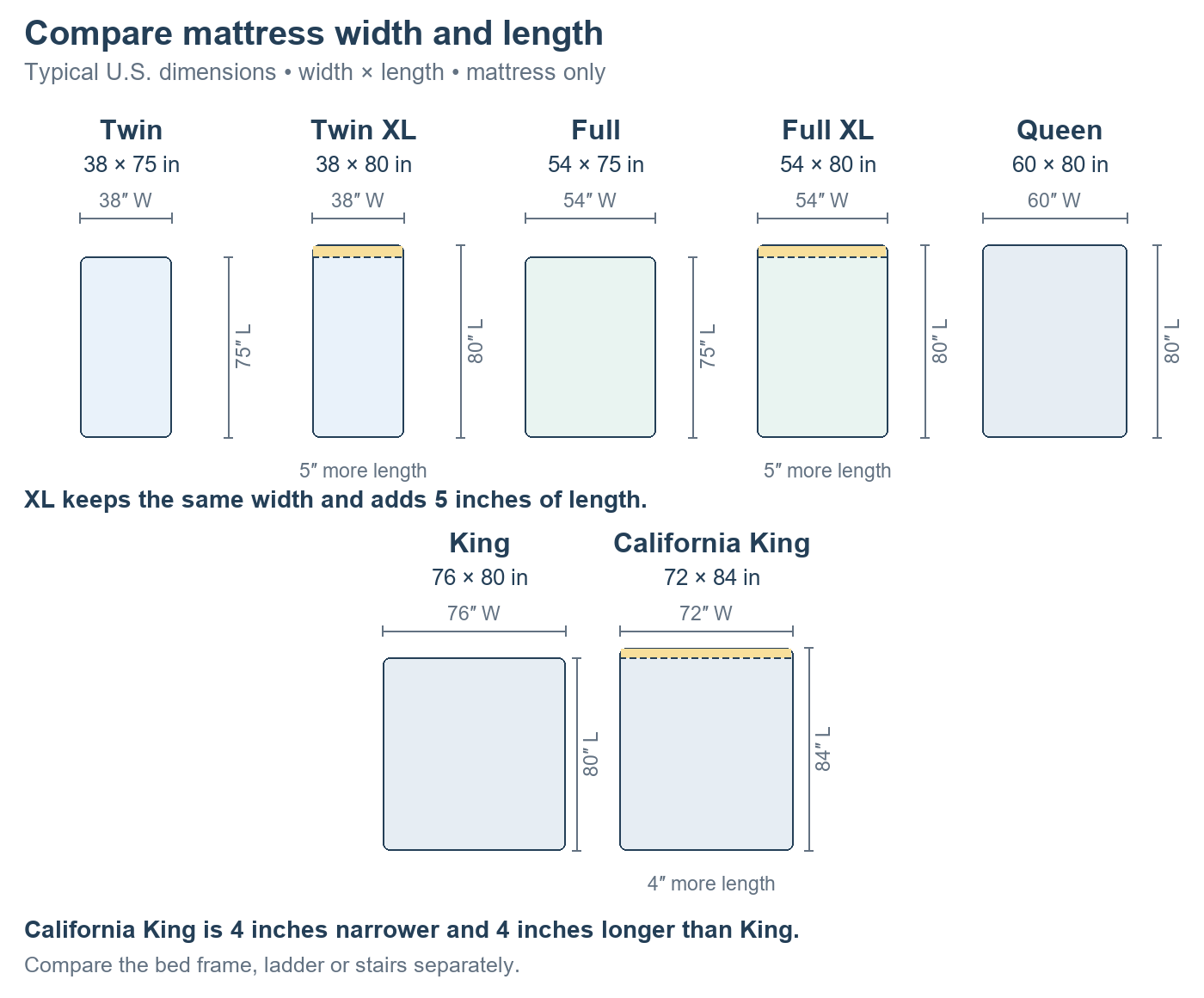
Typical U.S. mattress dimensions, width × length. The drawings compare mattress sizes; check the complete bed dimensions separately.
| U.S. mattress size | Width, inches | Length, inches |
|---|---|---|
| Twin | 38 | 75 |
| Twin XL | 38 | 80 |
| Full / Double | 54 | 75 |
| Full XL | 54 | 80 |
| Queen | 60 | 80 |
| King | 76 | 80 |
| California King | 72 | 84 |
Twin XL and Full XL keep the corresponding standard width and add five inches of length. XL means extra-long. Full XL and Queen are both 80 inches long, but Queen is six inches wider. California King is four inches narrower and four inches longer than King.
Match the mattress width and length to each sleeping surface in your selected bed, including a trundle. Our extra-long bed guide explains the Twin XL and Full XL comparisons.
Size references: Purple’s six-size chart and Orange Mattress’s Full XL specifications.
Mattress names change across countries
A familiar size name can describe a different mattress in another country. A UK King, for example, is narrower than a U.S. Queen. Compare the original width and length before buying a frame, replacing an imported mattress or ordering fitted bedding.
| Market and mattress label | Original dimensions, W × L | Approximate conversion |
|---|---|---|
| United States — King | 76 × 80 inches | 193.0 × 203.2 cm |
| United Kingdom — King | 150 × 200 cm | 59.1 × 78.7 inches |
| Germany — double, IKEA example | 160 × 200 cm | 63.0 × 78.7 inches |
| Australia — King | 183 × 203 cm | 72.0 × 79.9 inches |
Dimensions are width × length; conversions are rounded. Sources: Purple (U.S.), Dreams (UK), IKEA Germany and SleepMaker (Australia).
Put your shortlist to work
Keep two or three bed arrangements in consideration and picture an ordinary day in the room. Where will clothes and bedding go? Will the second sleeping place stay ready? What needs to move when someone goes to bed?
- Name the bed’s main job: everyday sleeping, storage, shared sleeping or a room that changes uses.
- Choose the width and length of each mattress, then check its required support and thickness.
- Mark the complete frame, ladder or stairs, and any drawers or trundle in their open positions.
- Compare the finishes and details after the practical choices work for you.
Browse our beds to explore the designs, or send the Totally Home team your room measurements, the models and options you like, and the furniture you want to keep. We can help you work through the choices.

Recent Posts
-
Loft Beds for College Students: Off-Campus Bedroom Setups
Quick Nav Overview Why Does an Off-Campus Room Need a Different Loft Bed? Off-Campus Loft Bed Setu … -
Types of Beds Explained: Designs, Mattress Sizes and a Little History
Start with what you want from the room: a place for a child to relax, storage for a bedroom with a s … -
Furniture Shopping in the AI Era: How to Find What Fits Your Home
You find a bed you like, save a few room photos and ask an AI tool for alternatives. Your shortlist …