
What Age Is Appropriate for Bunk Beds? | Safety Guidelines & Expert Recommendations
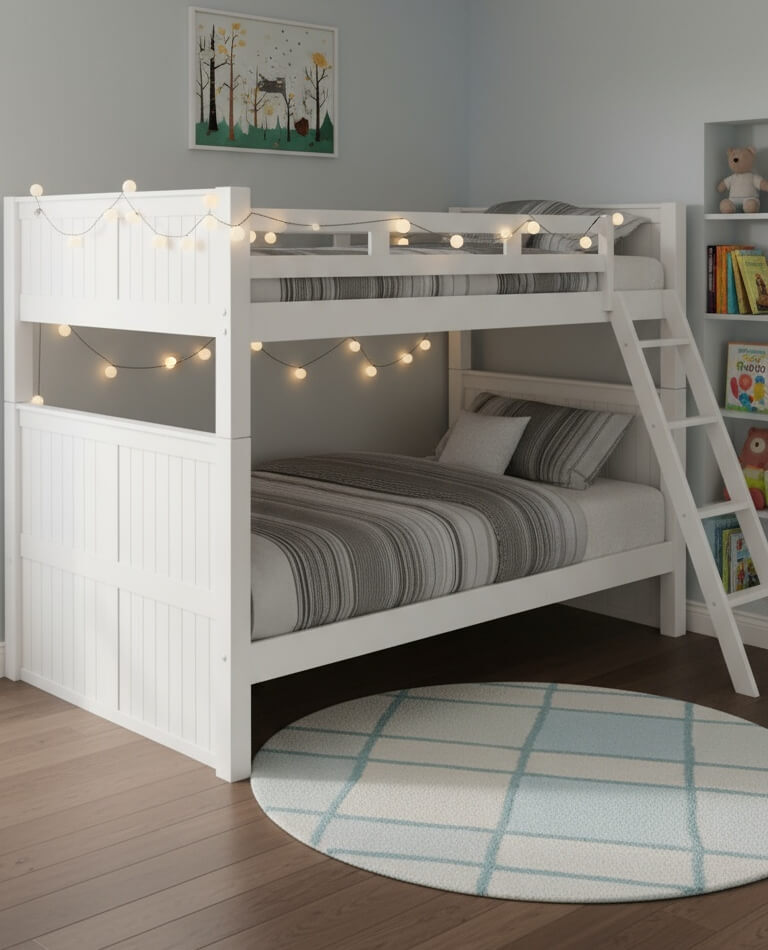
Choosing the right time to transition your child to a bunk bed involves more than just space-saving convenience. Totally Home Furniture understands that bunk bed safety is paramount for parents making this important decision. This comprehensive guide covers age recommendations from safety organizations and provides essential bunk bed safety information to help you make the best choice for your family.
Minimum Age Requirements for Bunk Beds
Top Bunk Age Restrictions
The Consumer Product Safety Commission and the American Academy of Pediatrics are clear: children under 6 years old should never sleep on the top bunk. This recommendation is based on extensive injury data showing that approximately half of all bunk bed-related injuries occur in children younger than 6 years of age.
According to CPSC regulations, manufacturers must include warning labels stating that the top bunk is not suitable for children under six. This age restriction exists because younger children often lack the coordination, balance, and risk assessment skills needed to safely navigate the top bunk, especially during nighttime hours.
| Age Group | Top Bunk | Bottom Bunk | Key Considerations |
|---|---|---|---|
| Under 4 years | Never | Not recommended | Risk of climbing; lacks coordination |
| 4-5 years | Never | With supervision | Can use bottom bunk; may climb unsupervised |
| 6-9 years | Yes, with precautions | Yes | Minimum age met; assess individual maturity |
| 10+ years | Yes | Yes | Fully appropriate with proper safety measures |
Understanding Bunk Bed Injury Statistics
Approximately 36,000 children and young adults receive emergency treatment annually for bunk bed-related injuries in the United States. While these numbers may seem concerning, understanding the data helps parents take appropriate precautions.
Key Injury Statistics
Falls account for 72-84% of bunk bed injuries, making them the primary concern for bunk bed safety. The most commonly injured body parts are the head and neck, representing about 27-52% of injuries depending on the study. Lacerations are the most frequent injury type at approximately 30%, followed by contusions and abrasions at 24%, and fractures at 20%.
Research shows that children under 3 years old are 40% more likely to sustain head injuries compared to older children due to their higher center of gravity, which causes them to fall head-first. Additionally, there's a surprising spike in injuries among 18-21 year olds, attributed to bunk bed use in college dormitories and military settings.
Essential Bunk Bed Safety Guidelines
CPSC Safety Requirements
Federal law requires all bunk beds to meet specific safety standards. Understanding these requirements helps ensure you're purchasing a safe product and using it correctly.
Required Safety Features:
- Guardrails: At least two guardrails on the upper bunk, one on each side, extending a minimum of 5 inches above the mattress top
- Gap specifications: No gaps larger than 3.5 inches to prevent entrapment and strangulation
- Secure fasteners: Guardrails must be attached with fasteners that require deliberate release or multi-directional movement
- Continuous guardrails: Rails next to walls or opposite ladders must run continuously from end to end
- Proper mattress fit: Mattresses must fit snugly with no dangerous gaps
Installation and Placement Safety
Proper installation significantly reduces injury risk. Position bunk beds in a corner with walls on two sides whenever possible to provide additional support and prevent falls. Ensure adequate clearance from ceiling fans, light fixtures, and windows. The area around the bunk bed should be free from furniture, toys, and sharp objects that could cause injury during a fall.
Bottom Bunk Age Recommendations
Children as young as 4 years old can safely use the bottom bunk, making bunk beds a viable option for families with younger siblings. However, parents should remember that curious toddlers and preschoolers may attempt to climb to the top bunk during play, even if they sleep on the bottom.
Lower bunks with mattress foundations 30 inches or less from the floor do not require guardrails according to CPSC standards. However, some parents choose to add guardrails to prevent younger children from rolling out during sleep.
Stairs Versus Ladders: Which Is Safer?
One of the most important decisions when choosing a bunk bed is whether to select stairs or ladders for accessing the top bunk. This choice significantly impacts safety, especially for younger children who meet the age-6 minimum but may still be developing coordination skills.
Bunk Bed Stairs: The Safest Option
Safety experts consistently recommend stairs as the safest access method for bunk beds. Stairs reduce slip risk by approximately 60% compared to traditional ladder rungs because they provide full foot contact with each step. The wider treads, typically measuring 25-30 centimeters, offer stable footing that's particularly beneficial for children ages 6-9 who are still developing balance and coordination.
Stairs also feature integrated handrails that surround children on both sides as they climb, providing additional security during nighttime bathroom trips when children may not be fully alert. Parents benefit from stairs too, as they make it significantly easier and safer to access the top bunk for sheet changes, bedtime stories, or comfort visits without the awkward maneuvering required with ladders.
Types of Bunk Bed Ladders
If space or budget constraints make stairs impractical, understanding the different ladder types helps you choose the safest option:
| Ladder Type | Safety Level | Space Requirements | Best For |
|---|---|---|---|
| Stairs | Highest | Most space (extends from bed) | Ages 6-9, parents seeking maximum safety, often includes storage |
| Angled/Slanted Ladder | High | Moderate (protrudes at angle) | Ages 6-12, balances safety with space efficiency |
| Straight/Vertical Ladder | Moderate | Minimal (flush to bed) | Ages 9+, tight spaces, compatible with trundles |
| End Ladder | Moderate | Varies by configuration | Unique room layouts, aesthetic preferences |
Why Angled Ladders Are Safer Than Straight Ladders
Angled ladders represent a significant safety improvement over straight vertical ladders. The critical difference lies in the user's center of gravity during climbing. With straight ladders, a child's center of gravity falls outside the plane of the ladder, making balance more difficult and requiring more upper body strength. This becomes particularly challenging for younger children or those who've just woken up.
Angled ladders solve this problem by positioning the ladder at an incline, allowing climbers to maintain their center of gravity above the steps. This natural climbing angle makes ascent and descent easier and reduces strain. Many angled ladder designs include safety rails on one side and feature wider steps with grooved, anti-slip surfaces for enhanced grip.
Essential Safety Features for All Access Types
Look for These Features:
- Wide steps or rungs: At least 2-4 inches wide for comfortable bare-foot climbing
- Anti-slip surfaces: Grooved treads or textured coatings prevent slipping
- Proper spacing: Rungs should be 10-12 inches apart (10 inches for younger children)
- Secure attachment: Fixed or locking mechanisms prevent shifting during use
- Handrails or grab holes: Provide support throughout the climb
- Appropriate materials: Solid wood or sturdy metal that won't warp or bend
Storage Advantages of Stairs
While stairs require more floor space than ladders, they often incorporate built-in storage drawers within each step. This feature can eliminate the need for additional bedroom furniture like dressers or toy chests, effectively reclaiming the space used by the stairs. Each step becomes functional storage for clothes, books, toys, or bedding, making stairs a practical choice despite their larger footprint.
Signs Your Child Is Ready for the Top Bunk
While 6 years is the minimum age, individual readiness varies. Experts suggest that children closer to 9 years old often demonstrate better coordination and risk awareness. Consider these factors when determining if your 6-9 year old is ready for the upper bunk:
Readiness Indicators:
- Sleep patterns: Consistently sleeps through the night without wandering or needing assistance
- Physical coordination: Demonstrates good balance and can safely climb ladders or stairs
- Rule following: Understands and follows safety instructions
- Risk awareness: Shows appropriate caution around heights and edges
- Bathroom independence: Can safely climb down at night if needed
- Climbing confidence: Comfortably navigates stairs or ladders without hesitation or fear
Frequently Asked Questions About Bunk Bed Age and Safety
What age is safe for the top bunk?
Children under 6 years old should never sleep on the top bunk. The Consumer Product Safety Commission and the American Academy of Pediatrics both recommend that only children 6 years and older use the upper bunk due to increased fall risk and developmental factors. However, some experts suggest waiting until closer to age 9 for optimal safety, as children in this age group demonstrate better coordination and risk awareness.
Can toddlers use the bottom bunk?
Children as young as 4 years old can safely use the bottom bunk, provided the bunk bed meets all safety standards. However, even with children using only the lower bunk, supervision is important as young children may attempt to climb to the upper bunk during play. Consider waiting until children transition from cribs (typically around age 2-3) and demonstrate the ability to stay in a regular bed before moving to a bunk bed setup.
What are the main causes of bunk bed injuries?
Falls account for approximately 72-84% of bunk bed injuries. These falls occur during sleep (29% of incidents), while climbing the ladder, during play (43% of falls), or when getting in and out of bed. Most injuries affect the head and neck region, with lacerations being the most common at 30%, followed by contusions and abrasions at 24%, and fractures at 20%. Children under 6 are at highest risk, representing half of all bunk bed injuries.
What safety features should bunk beds have?
Bunk beds must have guardrails on both sides of the upper bunk that extend at least 5 inches above the mattress top. Gaps in guardrails should be no more than 3.5 inches to prevent entrapment. The bed should have secure fasteners that require deliberate release, a sturdy ladder, and proper mattress fit with no dangerous gaps. All children's bunk beds must be tested by CPSC-accepted third parties and include appropriate warning labels and manufacturer information.
How can I prevent bunk bed injuries?
Prevention strategies include enforcing the age-6 minimum for top bunks, installing and maintaining guardrails properly, using nightlights to improve ladder visibility, prohibiting roughhousing and jumping on beds, keeping the area around beds clear of hazards, ensuring proper mattress fit and thickness, teaching children safe climbing techniques, and regularly inspecting the bed for loose fasteners or damage. Never hang items like belts, ropes, or scarves from bunk beds due to strangulation risk.
Is there a maximum age for bunk beds?
There is no technical maximum age for bunk bed use. Many teenagers and adults use bunk beds safely in dormitories, military barracks, and other settings. However, it's important to ensure the bunk bed is rated for the user's weight and that the dimensions remain comfortable as children grow. Some families transition away from bunk beds around ages 12-16 based on personal preference and space availability, but safety-wise, properly constructed bunk beds can accommodate users of any age within the weight limits.
Are stairs or ladders safer for bunk beds?
Stairs are the safest option for bunk bed access, reducing fall risk by approximately 60% compared to ladders. Stairs provide wider treads for full foot contact, integrated handrails, and easier climbing for both children and adults. If choosing a ladder, angled ladders are safer than straight vertical ladders because they allow climbers to maintain their center of gravity over the steps. Look for wide rungs with anti-slip surfaces, proper spacing of 10-12 inches, and secure attachment mechanisms regardless of which type you choose.
Creating a Safe Sleep Environment
Selecting the appropriate age for bunk bed use is just one component of bunk bed safety. Parents should combine age-appropriate placement with proper installation, regular maintenance, clear safety rules, and ongoing supervision to create the safest possible sleeping environment.
By following CPSC guidelines, adhering to the age-6 minimum for upper bunks, choosing quality products from reputable retailers like Totally Home Furniture, and teaching children proper bunk bed behavior, families can enjoy the space-saving benefits of bunk beds while minimizing injury risks.
Remember that every child develops at their own pace. If you have concerns about whether your child is ready for a bunk bed, trust your parental instincts and consult with your pediatrician for personalized guidance based on your child's individual development and needs.

Recent Posts
-
Vacation Rental Furniture That Survives High Turnover
Vacation Rental Furniture That Survives High Turnover Vacation rentals take a different kind of be …Apr 07, 2026 -
Loft Beds with Storage: Eliminating the Need for a Dresser
If you are working with a smaller bedroom, every piece of furniture has to earn its place. That is …Apr 01, 2026 -
Bunk Beds for Airbnb: Maximizing Guest Capacity Without Sacrificing Reviews
Quick Nav Why Bunk Beds Are Becoming Popular in Airbnb Rentals Can You Put Bunk Beds in an Airbnb …Mar 26, 2026